
04
04
04
DETOUR TOOLKIT
04
DETOUR TOOLKIT
04
DETOUR TOOLKIT
OCT-DEC 2023
OCT-DEC 2023
A detailed guide to help service operators at Ann Arbor’s bus system (TheRide) effectively communicate detours to reduce frustration and confusion.
TEAM
TEAM
Audrey Tang
Theo Berry
Yichen Hu
Theo Berry
Audrey Tang
Yichen Hu
ROLE
ROLE
UX researcher
UX designer
UX Designer
UX Researcher
(scroll to explore)
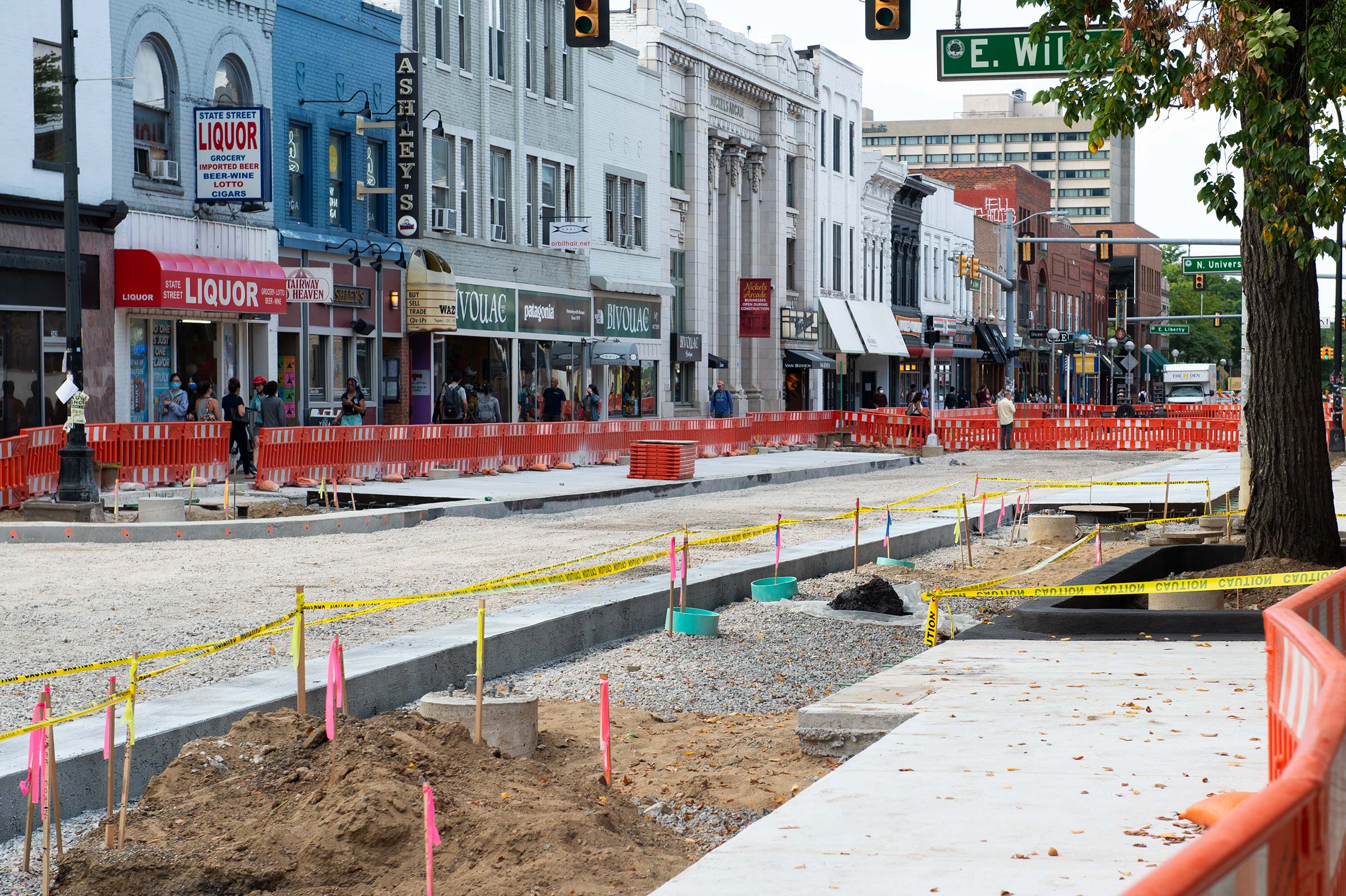
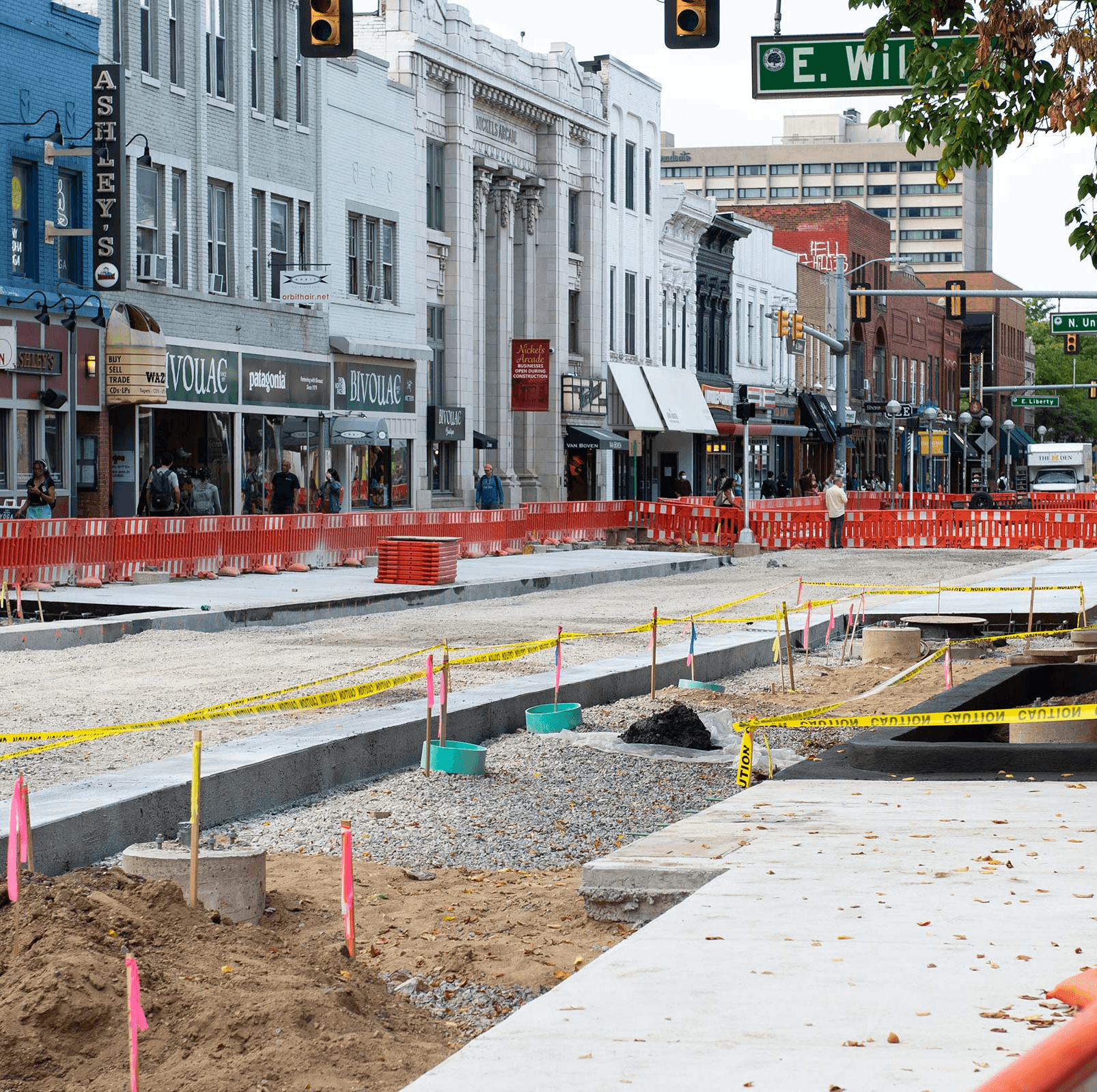
Each summer, Ann Arbor undergoes a number of construction projects that impacts roads and forces detours for local bus services.
With over a million boardings each year, these detours impact a significant number of TheRide’s ridership experience and our research has found that the service is ill-equipped to communicate detours with their riders.
So, how might we optimize TheRide’s detour alerts to improve rider experience?
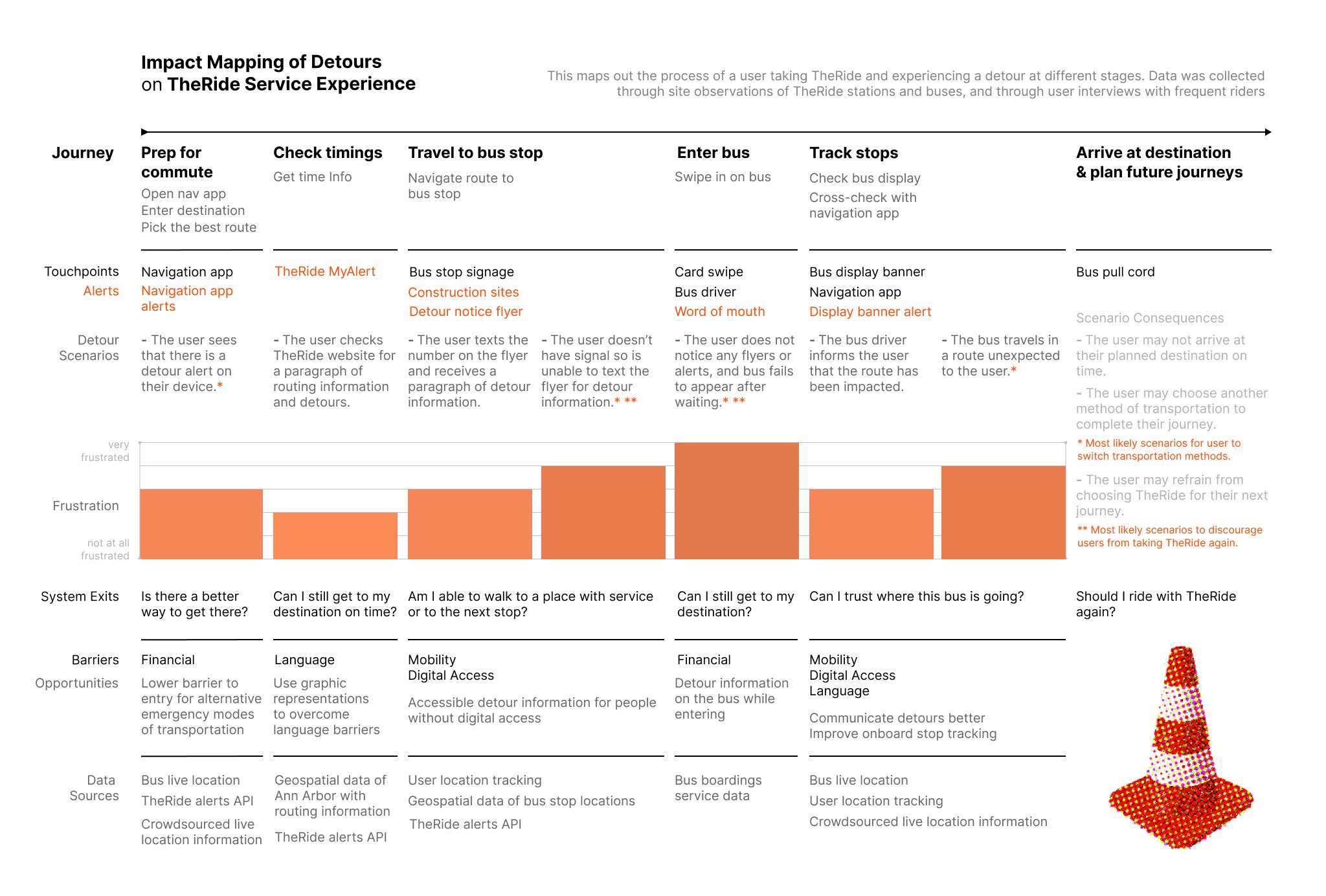
We began by conducting exploratory interviews and onsite observations to understand the journey of a rider experiencing a detour. To gauge the emotional impact, we also surveyed riders on their reactions to varying detour scenarios. Below is the resulting journey map.
Each summer, Ann Arbor undergoes a number of construction projects that impacts roads and forces detours for local bus services.
With over a million boardings each year, these detours impact a significant number of TheRide’s ridership experience and our research has found that the service is ill-equipped to communicate detours with their riders.
So, how might we optimize TheRide’s detour alerts to improve rider experience?
We began by conducting exploratory interviews and onsite observations to understand the journey of a rider experiencing a detour. To gauge the emotional impact, we also surveyed riders on their reactions to varying detour scenarios. Below is the resulting journey map.
Each summer, Ann Arbor undergoes a number of construction projects that impacts roads and forces detours for local bus services.
With over a million boardings each year, these detours impact a significant number of TheRide’s ridership experience and our research has found that the service is ill-equipped to communicate detours with their riders.
So, how might we optimize TheRide’s detour alerts to improve rider experience?
We began by conducting exploratory interviews and onsite observations to understand the journey of a rider experiencing a detour. To gauge the emotional impact, we also surveyed riders on their reactions to varying detour scenarios. Below is the resulting journey map.
We identified three key issues in the accessibility of the existing detour communications: confusing language, a lack of visual communication for spatial information, and passive alerts that requires active search for pertaining information.
To address these gaps, we aimed to redesign the current alert system to better retain ridership during detour instances.
We developed the Responsive Text Alert System to guide our redesign. With different combinations of short form text, long form text, and mapping, our alerts can easily adapt to any display. It offers quick and easy information access at the first touchpoint and the choice to expand on the information with each following touchpoint.
We identified three key issues in the accessibility of the existing detour communications: confusing language, a lack of visual communication for spatial information, and passive alerts that requires active search for pertaining information.
To address these gaps, we aimed to redesign the current alert system to better retain ridership during detour instances.
We developed the Responsive Text Alert System to guide our redesign. With different combinations of short form text, long form text, and mapping, our alerts can easily adapt to any display. It offers quick and easy information access at the first touchpoint and the choice to expand on the information with each following touchpoint.
We identified three key issues in the accessibility of the existing detour communications: confusing language, a lack of visual communication for spatial information, and passive alerts that requires active search for pertaining information.
To address these gaps, we aimed to redesign the current alert system to better retain ridership during detour instances.
We developed the Responsive Text Alert System to guide our redesign. With different combinations of short form text, long form text, and mapping, our alerts can easily adapt to any display. It offers quick and easy information access at the first touchpoint and the choice to expand on the information with each following touchpoint.
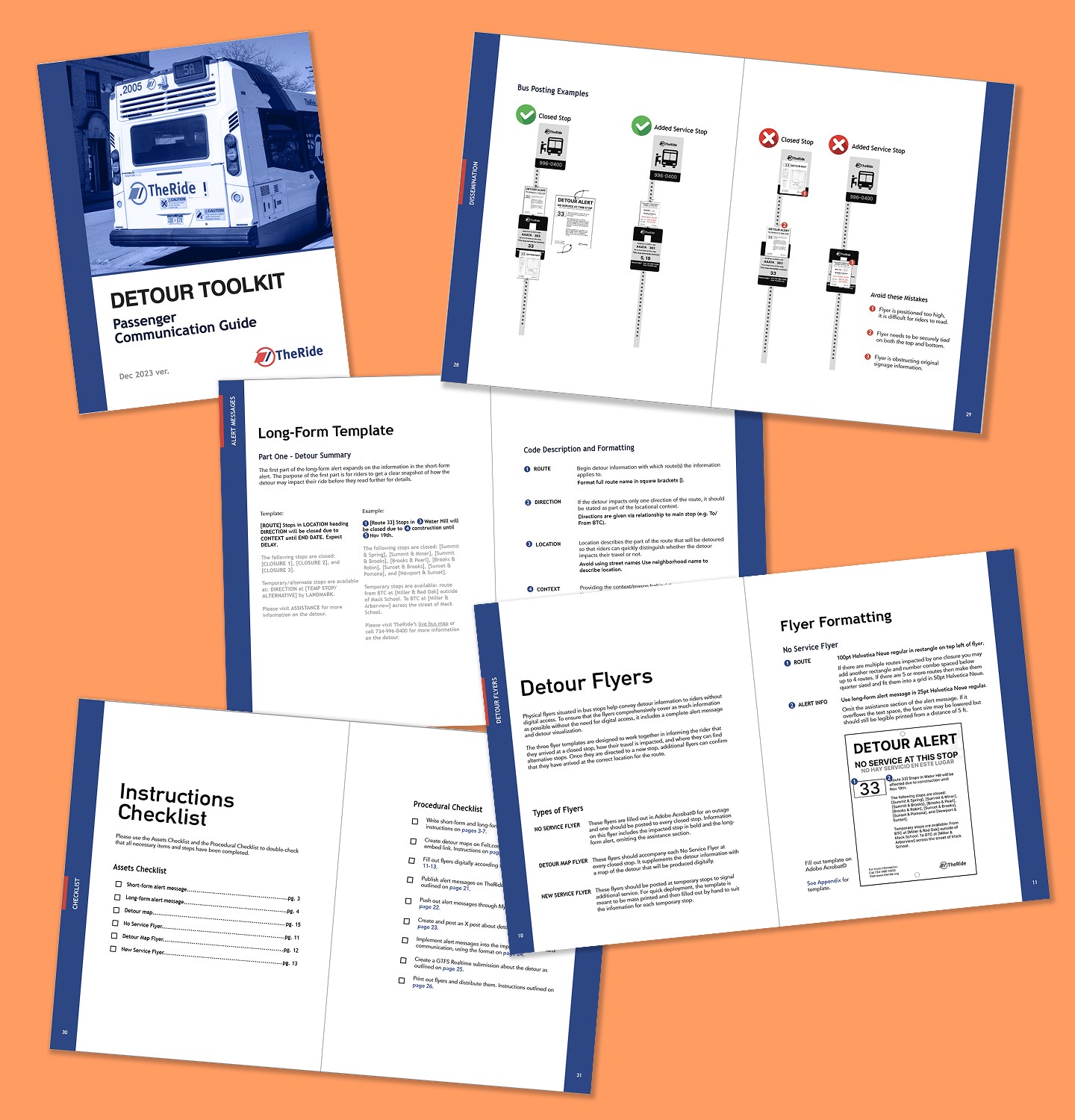
To minimize any confusing language, we rewrote real detour messages for clarity and consistency. Instead of using navigational terms to communicate the detour, we used stop names as they are more recognizable to typical riders. The toolkit provides a template for short and long form text alerts.
To improve the visual communication, we redesigned the detour flyers at bus stops and developed a new mapping convention. Our new flyers cover as much information as possible without the need for digital access.
Our full redesign is compiled to make the Detour Toolkit. To read the full 32 page guide click HERE↗.
To minimize any confusing language, we rewrote real detour messages for clarity and consistency. Instead of using navigational terms to communicate the detour, we used stop names as they are more recognizable to typical riders. The toolkit provides a template for short and long form text alerts.
To improve the visual communication, we redesigned the detour flyers at bus stops and developed a new mapping convention. Our new flyers cover as much information as possible without the need for digital access.
Our full redesign is compiled to make the Detour Toolkit. To read the full 32 page guide click HERE.
To minimize any confusing language, we rewrote real detour messages for clarity and consistency. Instead of using navigational terms to communicate the detour, we used stop names as they are more recognizable to typical riders. The toolkit provides a template for short and long form text alerts.
To improve the visual communication, we redesigned the detour flyers at bus stops and developed a new mapping convention. Our new flyers cover as much information as possible without the need for digital access.
Our full redesign is compiled to make the Detour Toolkit. To read the full 32 page guide click HERE↗.
(03)
(03)
OO
OO
. .
. .